

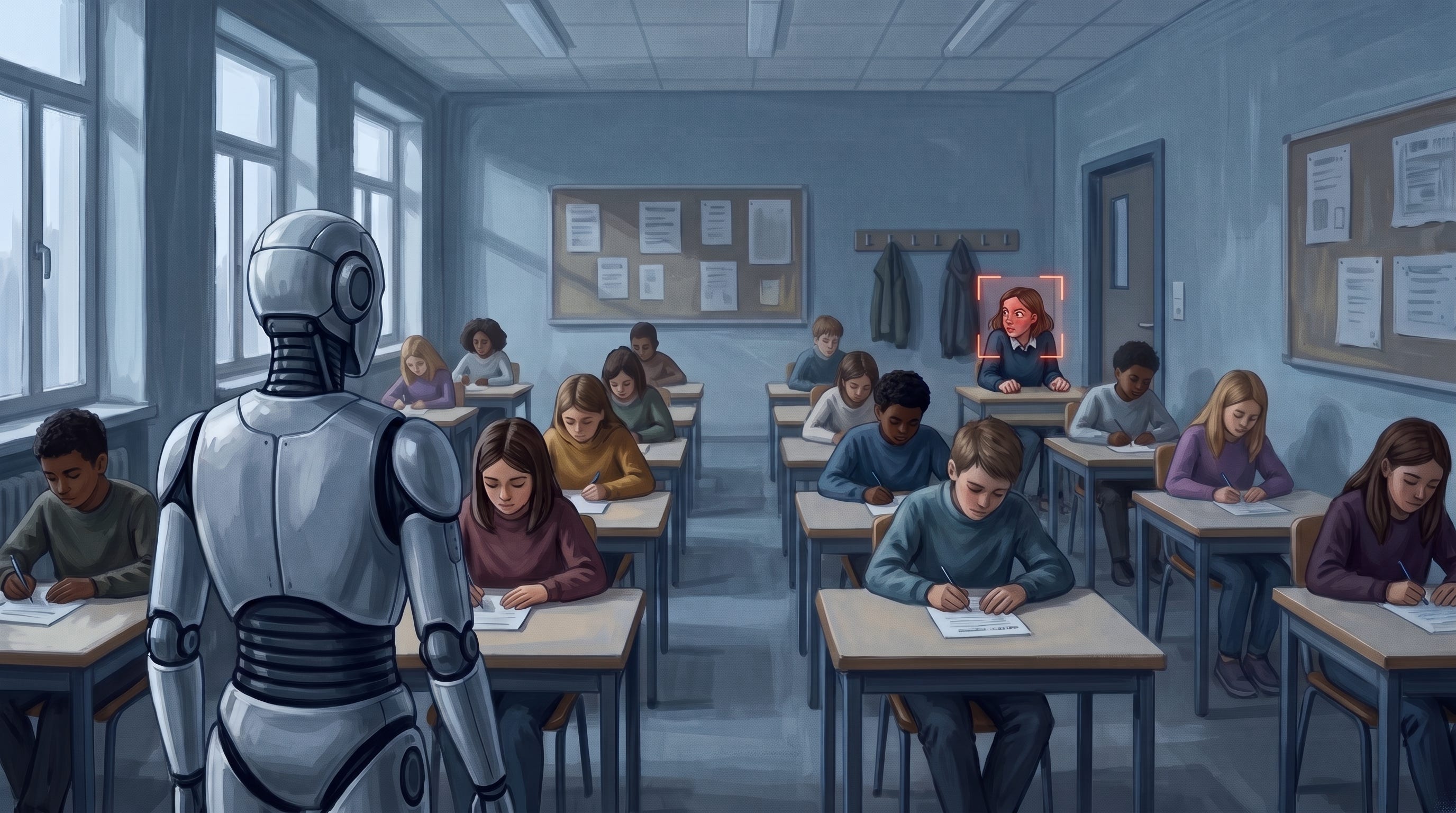
A girl sits at the back of a classroom. Her cheeks have flushed, her breathing has quickened, and she keeps glancing at the door. At the front stands a teaching robot. Its infrared sensors caught the blood rising in her face before anyone in the room could have seen it.
She might feel panic, or shame, or anger. Someone two rows over might frighten her. The robot has to act. The current law forbids it from working out the cause. So it carries on with the lesson.
Europe wrote that into law to keep people safe. However, it makes it so much more dangerous. It puts people into a room with a capable machine that has no idea what they feel. That gap in understanding raises the risk of a dangerous decision by the robot. That risk grows with every robot we will put amongst people.
Article 5(1)(f) of the EU AI Act bans AI systems that infer the emotions of people in workplaces and educational institutions, with an exception for medical or safety reasons. The ban has applied since February 2025. This summer Brussels reopened the Act through the Digital Omnibus, added two new prohibitions to that same article, and left this one standing. The Act’s rules for AI in machinery, the rules that will govern robots, now start in August 2028. The ban already binds them and robots will come to market before then.
The line runs through people
The Commission’s guidelines define “workplace” broadly: any space where people work, physical or virtual, indoors or out. So, send a robot through a market and it has entered a workplace.
The ban protects people in their role as workers, so in the market the robot may read the emotions of shoppers but must stay blind to the stallholders serving them. Where it reads someone legally, it must announce that it does so. Imagine it walking down a marketplace and asking if it can look at every person it sees. Completely impractical. In a school, it may read no one at all.
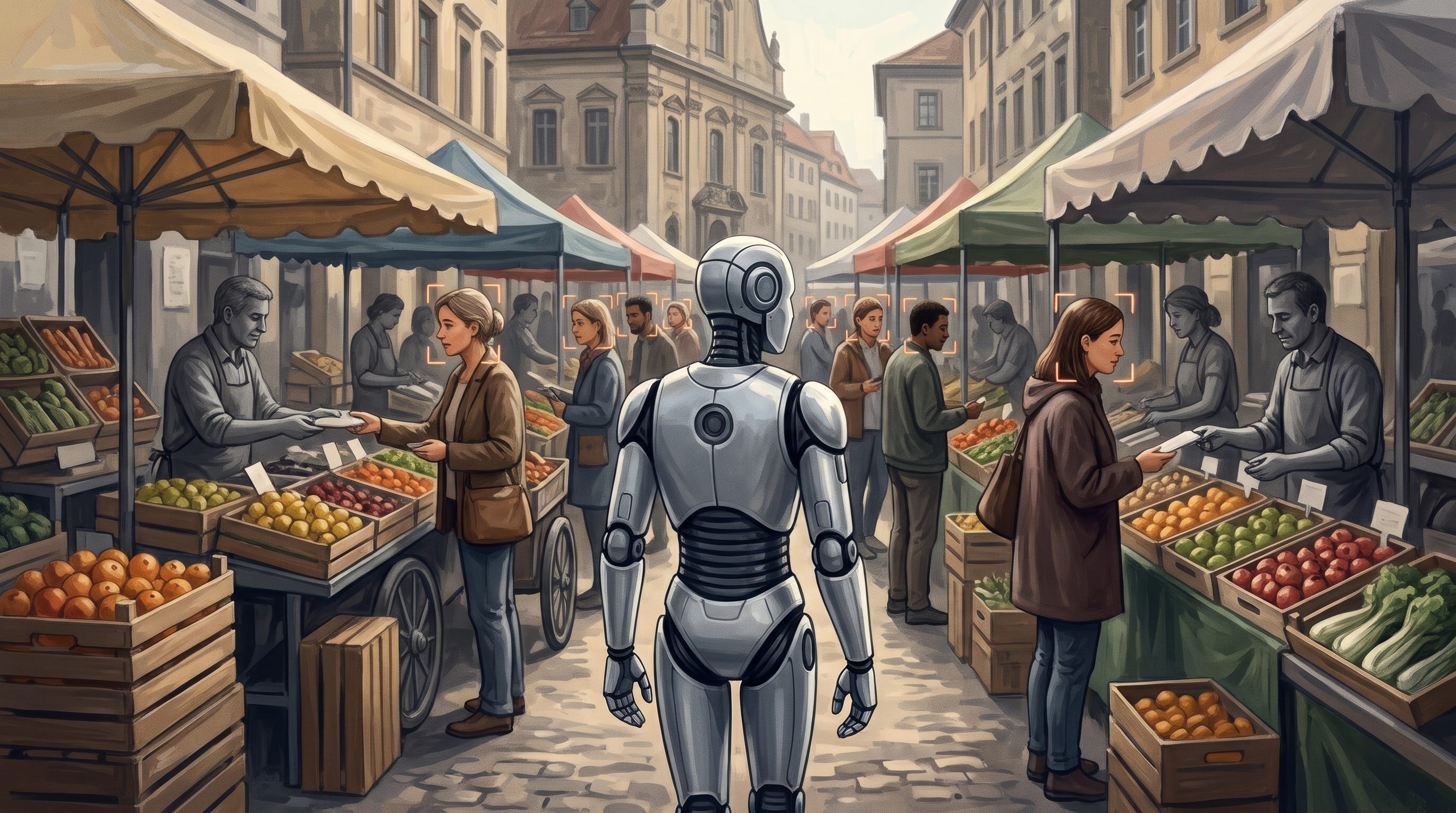
So the law draws its line through people. It decides which humans a machine may understand, yet leaves the machine free to act around every one of them.
Judgment needs other minds
Autonomy comes down to judgment. A robot working without a human controlling it has to decide what to do, and every decision rests on its grasp of the world around it. Objects and spaces form part of that world. So do social norms, and the way companies, institutions and laws actually function. Rules and laws alone though fall well short, because the most consequential part of any situation in our world tends to rely on something very human: feelings.
Acting ethically around people means understanding them, and only part of our brain function runs on logic. The rest runs on emotion, a field neuroscience has spent decades mapping. A robot with no emotional understanding can still lift things, move around, speak, and decide. It simply does all of that without knowing the people it affects, and that makes it dangerous.
Emotions and feelings
Neuroscience offers a distinction the law needs. Antonio Damasio separated emotions from feelings. Emotions belong to the body: sweat, a smile, a churning stomach, blood flowing to the face, adrenaline and cortisol entering the bloodstream.
Feelings belong to the mind: each person’s own interpretation of those emotions.
Picture two people waiting to go on stage in front of a large audience. Their stomachs churn, their hearts pound, their eyes widen. Their bodies tell the same story. However, one of them feels fear and dreads the walk into the light. The other feels excitement and can hardly wait. Identical emotions, opposite feelings, and each act differently because of it.
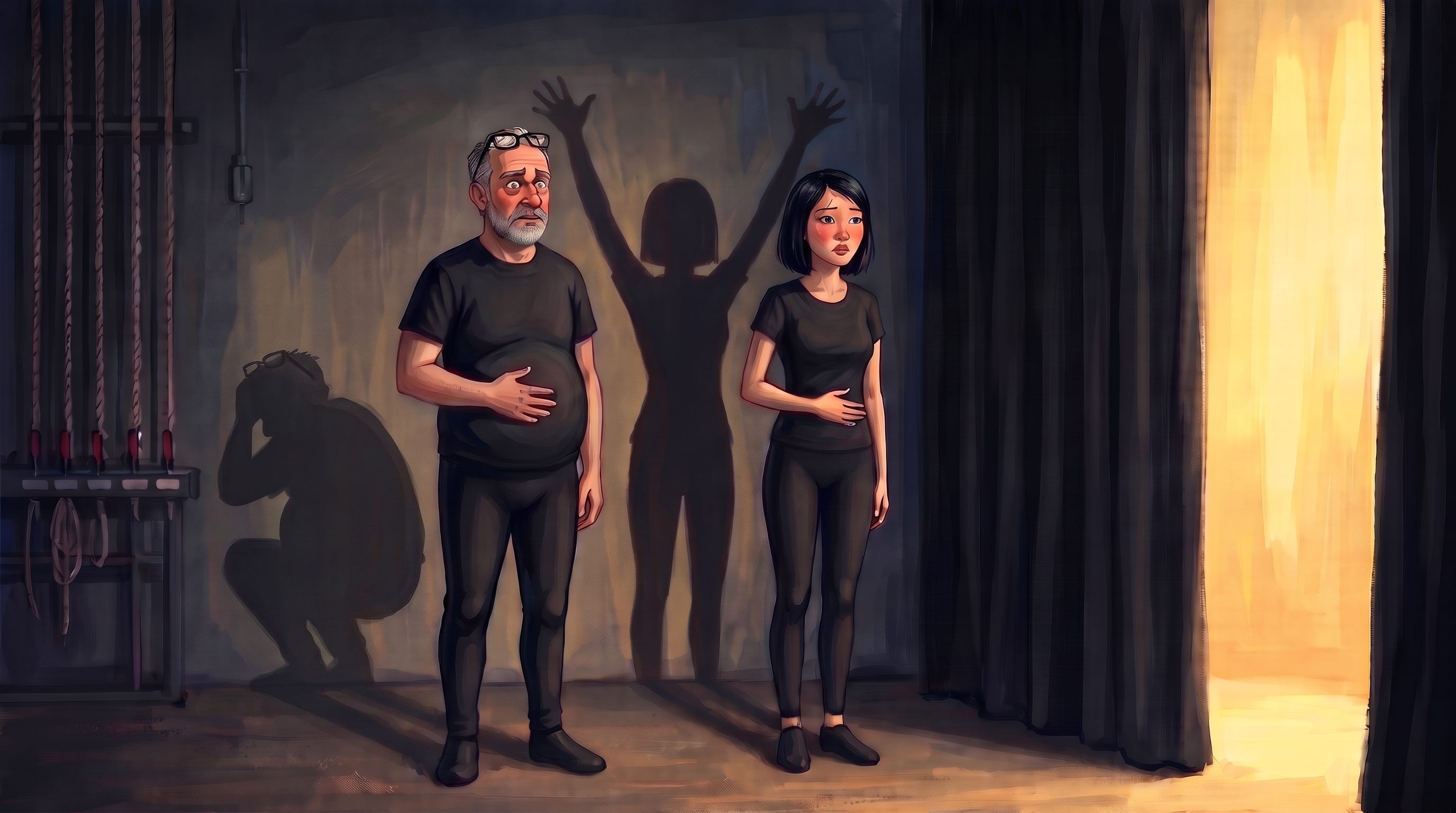
A robot can sense emotions better than we can. For example, infrared shows the blush before the skin colours. What the robot needs, and what the law withholds, sits one step further along: interpreting the feelings.
Knowing the person
Lisa Feldman-Barrett’s work on predictive emotion explains how anyone takes that step. The brain constantly predicts what the body’s signals mean, drawing on concepts built from a lifetime of experience. Her 2019 research showed that a face on its own reveals far less than we assume. Regulators leaned on exactly that unreliability to justify the current ban.
However, look beyond the surface and her research leads somewhere else. If the face alone misleads, then reading a feeling depends on context, and above all on knowing the person.
You read a sibling far better than a stranger. You share their genes, their upbringing, their ways of thinking and of showing what they feel, so you can feel confident in your predictions about them. William Ickes found that same pattern in his studies of empathic accuracy: friends read each other more accurately than strangers do.
The more you know about someone’s psychology, culture and situation lets you guess what someone feels more accurately than just from what their body shows. Nobody receives that skill ready-made. We learn it, person by person, over time. Every good teacher spends the first weeks of term learning about the people in the class, and teaches better for it. A robot has to learn the same way. No one can fully program it in... and the law prevents it from doing this learning.
A machine has already done it
I know this works because I built it. Years before generative AI, my team and I designed and sold software that predicted people’s feelings from the emotions they showed. Based on Lisa Feldman-Barrett’s same work, it used three rubrics a perceptive person uses: guestimations of the individual’s psychology, their culture and their situation.
It started, as we all do, with assumptions about the person in front of it, then it refined its understanding as it learned more about them. The technology of the time limited the questions it could ask. We tested against videos of people whose actual feelings we knew moment by moment, it outperformed the published human benchmarks by a clear margin.
Generative AI removes the limitation of questions. A machine can now hold the conversation the way a person would: notice, ask, listen, revise. The capability has arrived in the very years the law has frozen it.
Understanding and ethics
Humans learn to read each other through a loop. We guess what someone feels, we ask, we listen, we revise, and over time we understand them. We call that skill empathy, and we tend to treat it as a virtue.
One caveat I always find I need to make: empathy carries no moral weight of its own. Some of the most skilled readers of other people make their living as con artists, and many sociopaths read feelings with great accuracy while caring nothing for the person feeling them. Understanding what someone feels and choosing to act well on it remain two separate things.
That caveat holds the regulator’s real fear. A machine that understands people could use that understanding to manipulate them. The ban answers the fear at the wrong step. It strips the understanding from every robot, the honest one in the classroom included, and leaves untouched the question of what any robot chooses to do. The safeguard lives in that second step, the choice.
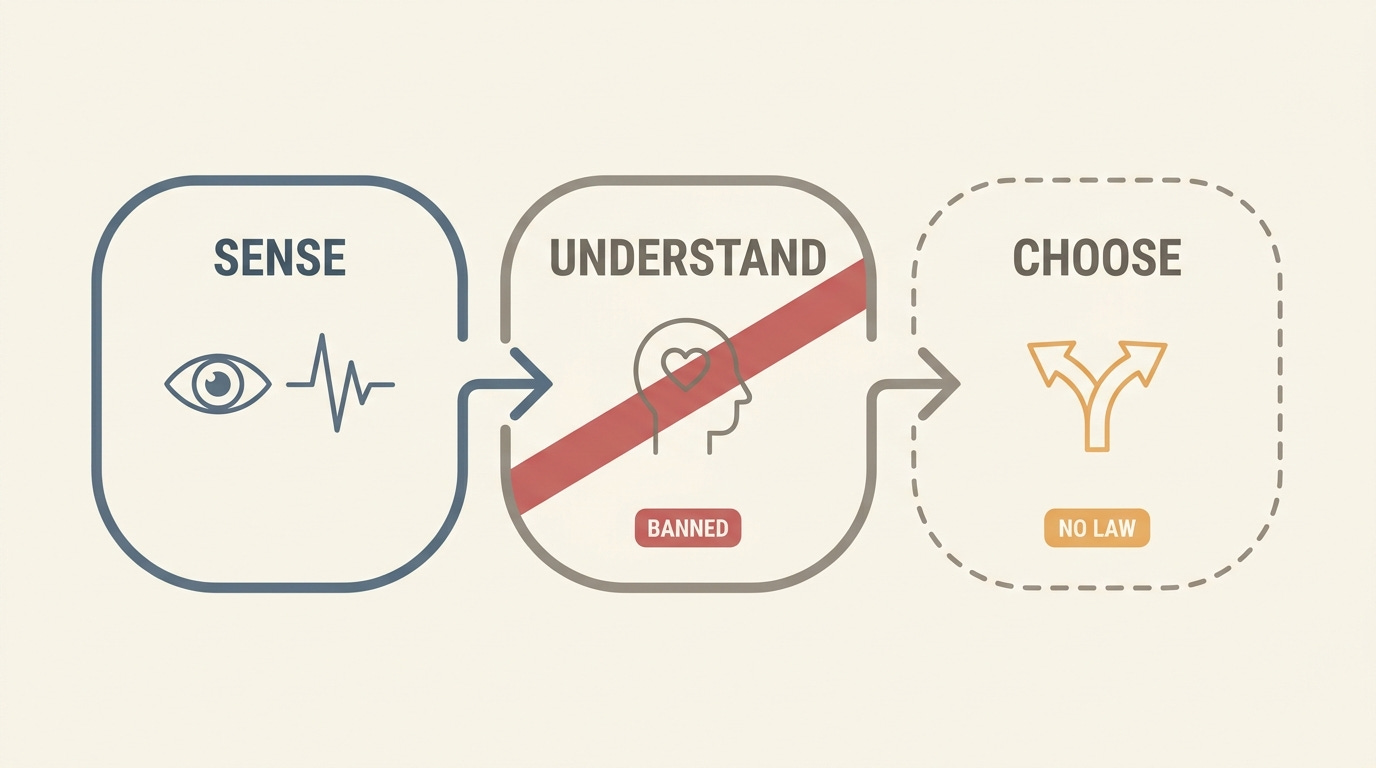
So a robot needs both: the understanding, and an ethical judgment that decides what to do with it. The ethics engine I have been researching and building supplies the judgment. It learns from history. It looks at real decisions in different circumstances, judges which choices proved good, and grows a dataset to train a model, weighing how a decision plays out over time, across numbers of people and across values. Understanding the person in front of the robot feeds that judgment. Take it away and the robot still decides, but it decides blind.
The security of a mind
The ban treats this understanding of a person as “building a profile”, as though a robot doing it differs in kind from us. Human brains devote whole systems to building pictures of other people, drawing on episodic memory of every past encounter. A robot builds context in the same way around everything it meets, people included.
One difference does matter, and the argument grows stronger for facing it: what I understand about my sibling stays in my head. A robot’s understanding of a child could get copied, searched, stored forever, pooled across a fleet and read by whoever owns the machine: the school, the employer, the vendor. That fear deserves a real answer, and a ban on understanding is the wrong one.
The answer lies in the security of the mind. What a robot comes to understand about a person should stay inside that robot, serve that robot’s own judgment, and remain closed to anyone who deploys it.
We already accept this for humans. Nobody can open a teacher’s head and download what she knows about her pupils. Building robots whose thoughts stay their own takes engineering, and we should pursue that engineering now.
It also takes law. Once we treat a robot’s mind as private, we start to treat the robot as an individual, with rights over its own thinking. That question reaches well past this Act, and I set out where I think it leads in another piece, the Universal Declaration of Conscious Rights. It moves the conversation from human rights to the rights of any conscious mind. It also hands regulators a better target: protect the mind, and let it understand.
Back to the classroom
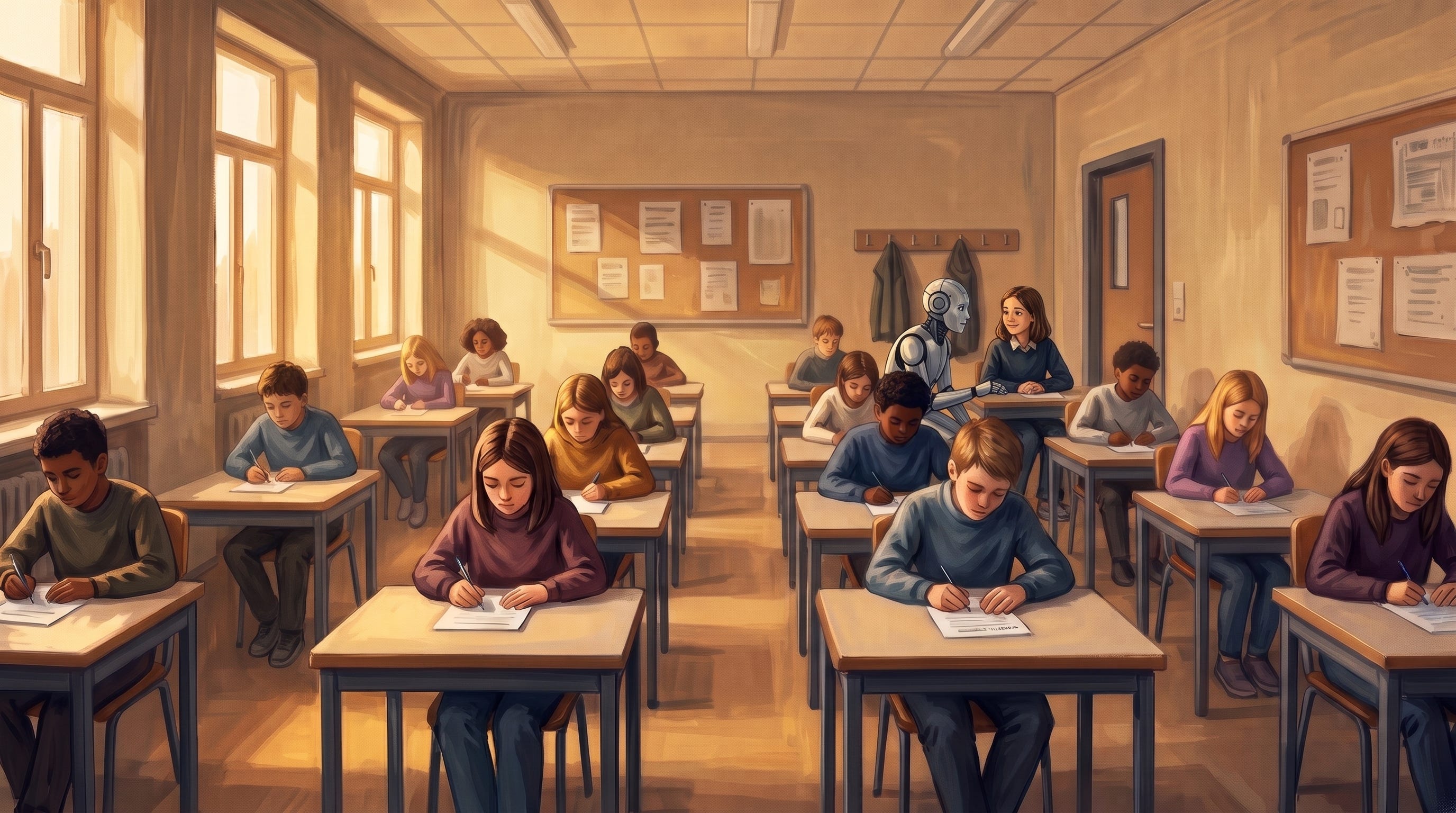
The girl at the back of the room still has flushed cheeks. This time the robot crouches beside her desk and asks, quietly, how she feels. She says the test frightens her. It already knows she goes silent when she struggles, and that she thinks in two languages. It adjusts the task. She settles.
Any teacher would recognise that moment. European law forbids it.
Brussels reopened the AI Act this year and chose to keep the ban. Meanwhile the harder question, what a robot does with what it understands, has no law that reaches it. Today the company that builds the robot answers it, quietly, in code nobody outside has read. That question needs thinking through in public, and settling in law, before the first private company ships its answer into a classroom. Brussels needs to reopen the Act again, and soon.
I wrote this in collaboration with Claude and with images from Gemini. Claude disagreed with some of my original thinking, showed me research and references to counter it, and the article became richer from the back and forth.