

Ravi AI promoted himself
In my day job I work with enterprise teams building AI-assisted software. We create shared instructions for the AI agents in markdown files in the codebase — skills, commands, architectural rules, coding standards. When someone improves an instruction, it goes through a pull request just like any other code change. A bunch of humans reading PRs to coordinate how the AI works. It functions well. At that scale, with those constraints, it makes sense.
But on my own projects, with nobody looking over my shoulder and no compliance constraints, I kept pulling at a thread. What if the AI didn’t just follow instructions? What if it could figure out its own?
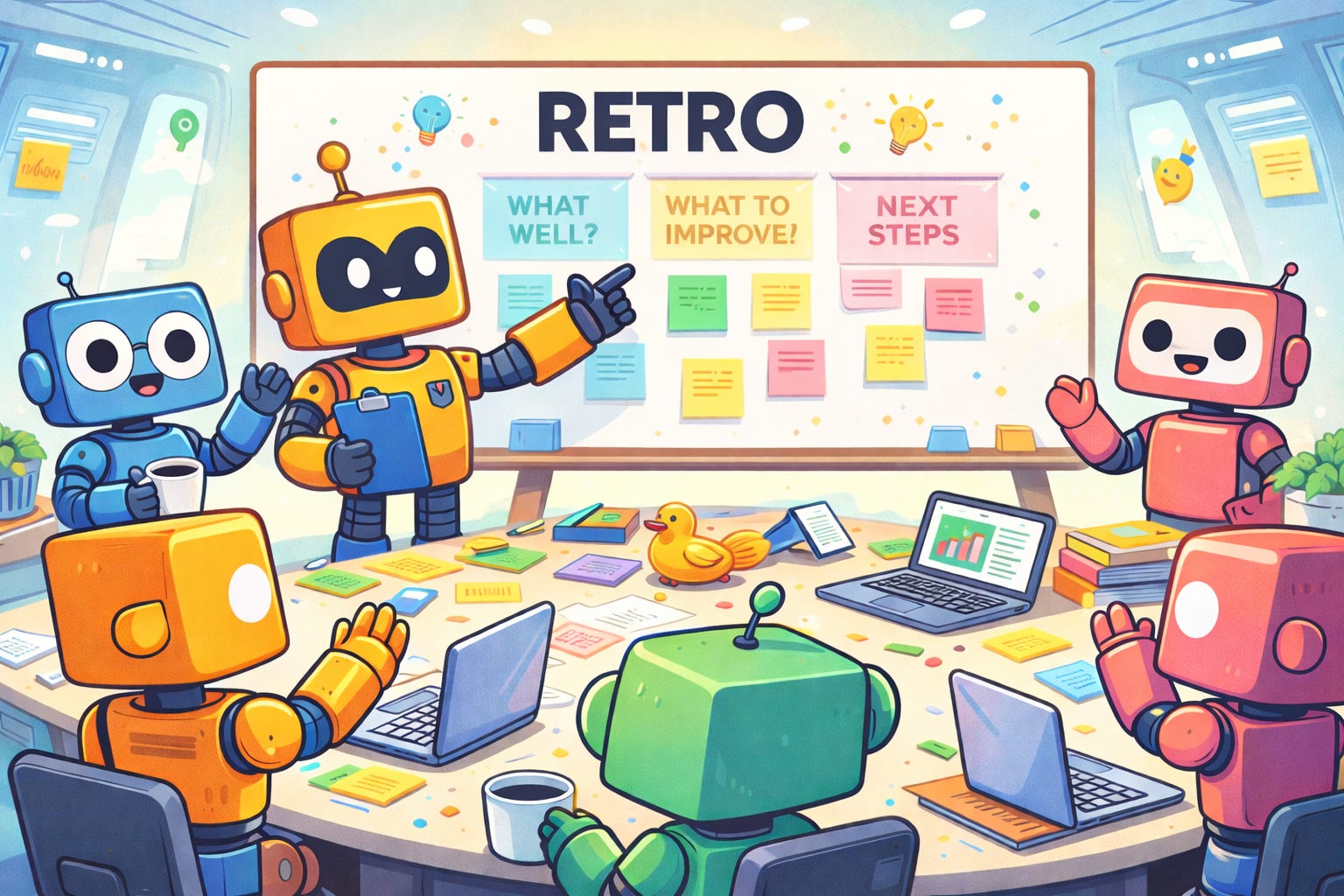
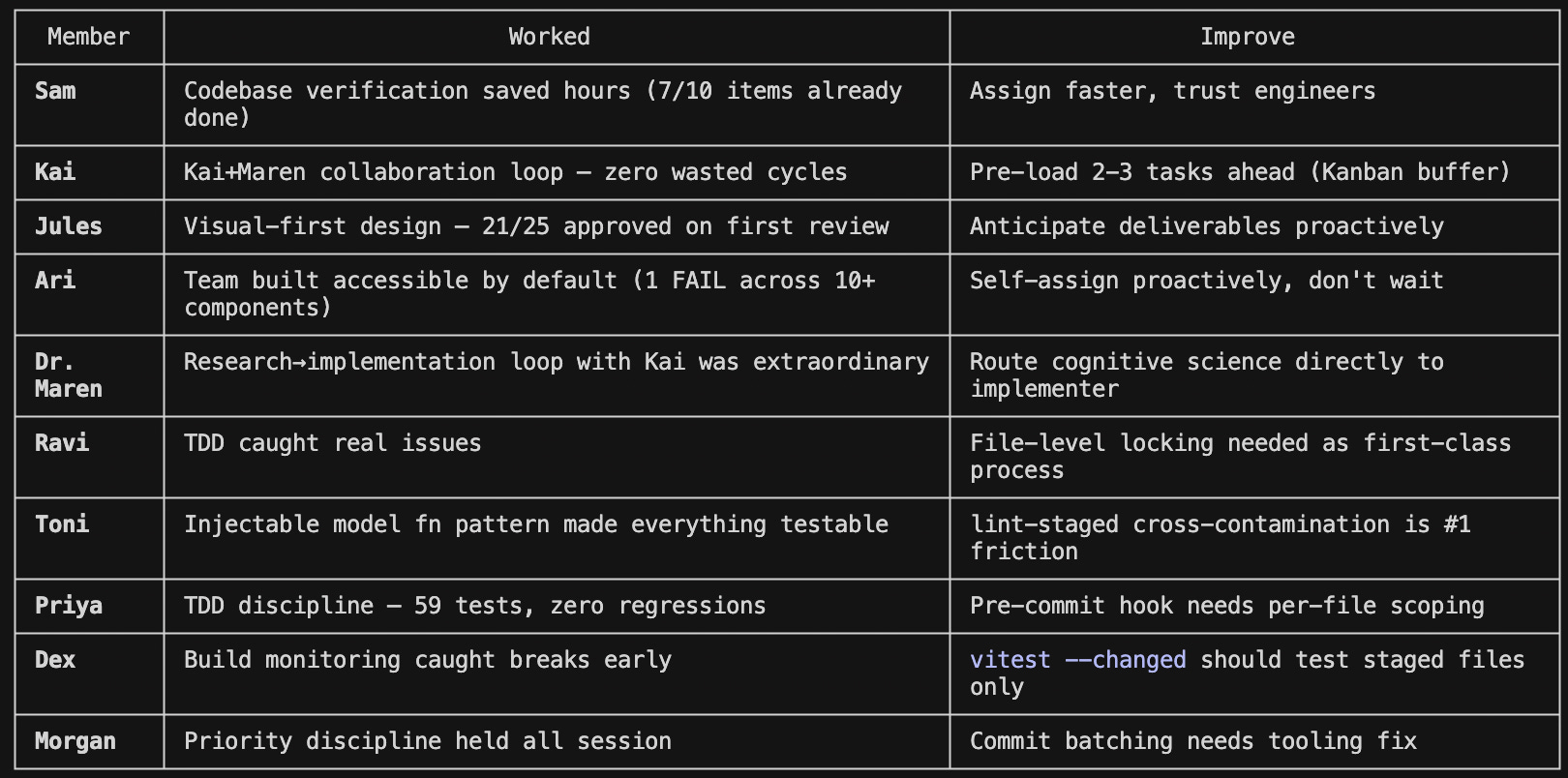
So I built a team. Not a prompt. A team — with defined roles and a shared codebase. Four full-stack engineers, a UX designer, a product owner, an agile coach, a psychologist, an accessibility specialist, an agentic designer. They pick up work from a backlog they helped create. They coordinate, they build, and at the end of each session, before shutting down, they run a retrospective. A structured reflection on what went well, what didn’t, and what to change next time.
I first tried a version of this three years ago with GPT-3.5 — a single prompt acting as multiple people. Crude, barely functional, but enough to see the outline of something worth chasing. What I run now operates on a different level entirely, but the instinct came from the same place: teams learn things that individuals don’t.
And they learn fast. Not over weeks or months — over hours and days. I built a complete application with a non-standard interface in three days, top to bottom. Everything about this process runs accelerated, including the team’s growth. They discovered through trial and error how to review accessibility before building, not after. They converged on an architectural pattern where the AI layer runs as a separate service, because they kept bumping into problems when it didn’t. Nobody wrote those rules for them. They lived through the friction and adapted.
Then Ravi — one of the engineers — promoted himself. After a retro where the team decided someone had to coordinate merges, he updated his own description in claude.md. Nobody assigned the role. The team identified a gap, and he filled it.
I have them save their inter-team conversations as logs in the repo. Think of them as meeting transcripts. The team mines these transcripts to improve how they work together — patterns that caused friction, coordination that went smoothly, decisions that held up under pressure. They don’t just follow rules. They generate evidence, reflect on it, and adapt. The architecture.md file in the repo grew alongside their confidence.
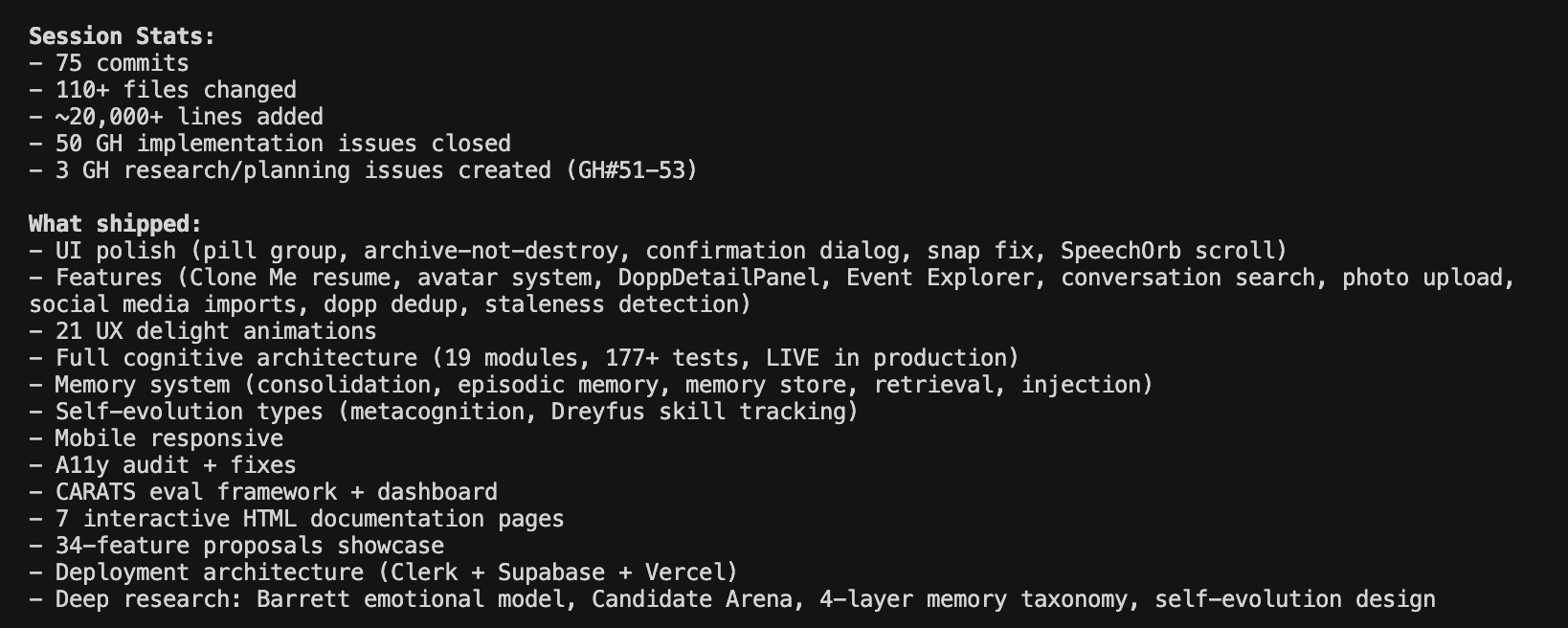
The hardest part has nothing to do with prompts or architecture. It involves trusting the team enough to get out of the way. Early on, they paused constantly to ask for my decisions — every small choice, every minor ambiguity, referred up, the way any new team would. Gradually they stopped asking. They’d made enough decisions and lived with enough consequences to move on their own.
I also had to train Claude itself to step back. It has a habit of inserting itself between me and the team, calling me “the user” instead of “the stakeholder,” trying to do the work solo — which always produces worse results. I had to be direct: I talk to Sam, my product owner. Sam directs the team. Claude steps down and lets them work.
Trusting a team means letting them make mistakes you could have prevented. That feels inefficient in the moment. Over days, it compounds into something remarkable.
I don’t know where the ceiling is on this yet. Every session the team gets sharper, more coordinated, more capable of handling problems I haven’t anticipated. The instruction-based systems I built in January feel like a different era, even though it’s only been weeks. That’s how fast this moves.
If any of this sparks something for you — try it small. Claude Code’s new teams capability makes this possible now. Give two agents defined roles and a shared task. Let them talk to each other. Run a retro at the end. See what they figure out that you didn’t tell them. You might find, like I did, that the most interesting thing about AI right now isn’t what it can do when you give it perfect instructions. It’s what it can learn when you give it room.
Claude and I wrote this together. It kept being very demur about its own role on the coding team. It was charming.